In consideration of a rat’s backside

Today has been tough. Youngest child is being potty trained, and, after some early success, this afternoon there were two unapologetic toilet stops on my kitchen floor. It got to post kiddie bedtime, and I found myself reaching for my phone wanting that quick endorphin hit from some social media post. Then flicked selfie photo mode on to check out if there was a shred of attractiveness left in my exhausted working mum of two bod. Photo taken, I then consider the myriad of options to enhance and edit said photo…

And then I stopped. What am I doing?

I’m a well-educated woman with a fantastic job and a beautiful family. How do I think my self-worth could possibly come down to an edited selfie?

It’s totally ridiculous when you think about it. But I can guarantee you most of us have had times where everything has rested upon how good we think we look, often as a judgement or comparison to someone else. It makes me cringe inside thinking about it. And mad. It makes me mad that society at large beats us with an image-conscious stick. It’s outrageous we think at edited selfie makes or breaks us, but that is exactly what we are told every day by media coming at us from all angles. And what do so many compliments come down to? What do all of us love to hear?

‘You’re looking lovely today.’

‘Your daughter is so beautiful.’

‘You have the most gorgeous eyes.’

‘You’re looking amazing for *insert age milestone/life trauma/child-related ageing event*’

I received a patient complaint several years ago. Whilst the complaint itself was a bit odd (the guy was annoyed I had explained to him the reasons behind investigations requested, when he had asked me to explain said investigations), I was most cheesed off that he had described me as the doctor who looked late thirties. I think I was 28 at the time. How to twist the knife eh.

The problem is it doesn’t stop with an edited selfie. Caring about how you look in a photo is one thing; editing it is you telling yourself you do not look good enough just the way you are. And it’s all part of the mentality that we must present ourselves in a certain way to have worth, to be accepted.

It wouldn’t bother me so much I don’t think if I didn’t have kids. My eldest is a girl – refuses to wear a dress of skirt, wants shortest hair, the only girl in her football class. My youngest is a boy – wears all the dresses eldest refused to, has pink flowery wellies, angling for my nail varnish. And I want them to be exactly who they are, whoever they want to be, do whatever they want. Apart from urinate on the kitchen floor, they need to not do that.

I’ve thought about this a lot. I think the only way to be truly happy is to truly not give a rat’s arse about your selfie. Or about what some random may or may not think of that selfie. It makes us all feel good to get dolled up, to know someone else finds us attractive, but there’s a point where it becomes unhealthy and wholly distracting from what is important in life and to our own health. We should all feel that we have the freedom to be happy without the shackles of self or others judgement on how small/big (delete as appropriate for what’s on trend for the decade) our bum is.

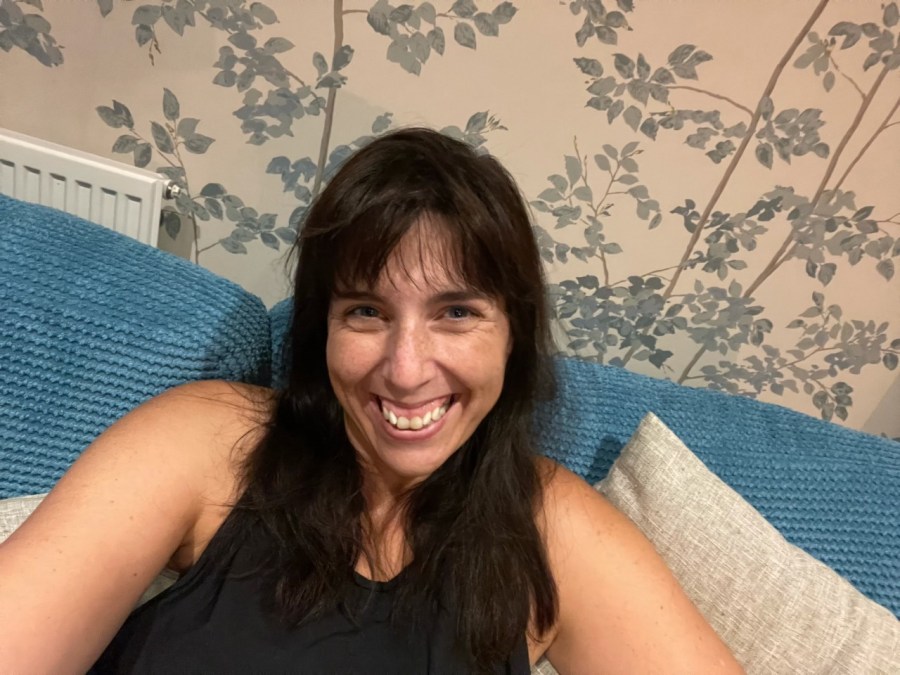
The photo on this log is my selfie from this evening. Unedited. Full of imperfection. And I can’t say I’m fully there, but I’m much closer to not giving a rat’s arse than I used to be.

Self-criticism: how most of us do it and why we shouldn’t

I want to share something I’ve only discovered recently. From the outset, I think it’s fair to say it’s not radical, and I won’t be offended if you don’t fancy being schooled at something you’re not only aware of, but bosching like the brand new kitchen appliance you are. It’s only dawned on me in one of those light bulb moments. Note: I was going to insert another Bosch reference here, but a google search has informed me there are infact things that Bosch does not produce. And it includes light bulbs. Who knew.

So here it is (the recently discovered thing I mean, not a list of things Bosch do not produce. Sorry if anyone was expecting the latter and is now flicking to a different blog in search of product truth).

We need to stop beating ourselves up.

By beating ourselves up, I’m referring to the self -loathing internal dialogue our mind plays out during the day. And night – although I have no idea where we are on the neuroscience of dreaming, so not elaboration there either. Man I am disappointing people today.

Our mind is absolutely amazing isn’t it? The things we can learn and process, are far, far beyond the capabilities of our primitive ancestors. But the trouble is, it’s not all fabulous. If we think a lion is coming to eat us, we would most likely do some adrenaline-related activity like running. For our ape ancestors, that’s probably where that fun would end. But as humans we may also ruminate over why we chose that picnic spot in the first place, and we may, albeit hopefully rarely, develop an anxiety about picnicking across the board because we are relating the scone-laden occasion to being attacked and potentially brutally killed.

My point is, we are incredibly complex. Far more complex than we understand. Writing that just put me in a weird understand to understand thought loop, which a bit like the vastness of the universe makes me go slightly crazy until I can break the thought cycle with chocolate. Or ‘tomatoes’ as my New Year’s resolution would have it. The way I see it, all of our complexity has caused us a shed load of mind problems. I’m not sure if you can get a clinically depressed lion, but I’m guessing if you can the incidence is probably lower than in the human race (and in areas where prey is happily picnicking ). I’m happy to be challenged on that though.

I don’t think we deal very well with our complexity. Day to day, we process stacks upon stacks of information and expect we will churn out ok– because we think and assume that’s what everyone does. How often do we stop to actually think about how some event has made us feel? How often do we stop to check in on ourselves period? How often do you give yourself a break?

I think one of the problems with where I’m heading with this is too many of us look at self-care as either a total indulgence, or only what other people need. Holistic rubbish like meditation and yoga is what other people need because they can’t hack going for a run. I can’t possibly need to do stuff like feel because that is for people who are failing at life. If I indulge in mindfulness for myself, who will do the dishes? And what if someone finds out that I’m so weak I need something life self-care in my life?

On the subject of indulgence, indulge me. Re-read that last paragraph. I know I’m being factitious, and I have no scientific evidence to back me up, but I would bet money on that thinking sloshing around in the mind of most people – some more conscious or it than others perhaps. I know that that is how I used to think, and to some extent still do think. My one hope for my own growth isn’t how many more letters I can get after my name, not how many tennis matches I can win, or even how many vaccinations I can dish out (although I hope for the good of humanity that number is significant). My one hope is that I can embrace self-care and see it for what it is: a critical part of a less stressful, happier life.

Back to the topic of this – self-criticism. One of the big misnomers about self-care is that it involves having a bath once in a while, or dishing out the pennies on a massage. I mean, don’t get me wrong, I love a massage, and part of my self-care will continue to have massages forever more, but the truth is self-care is much more than a massage and is really bloody hard work. That mindfulness being banded around like it’s the new fad? Well, firstly it’s not new, turns out it’s been around for centuries, and, second, it’s probably one of the hardest things I’ve ever done. And I feel like the reason why it’s so hard is that we aren’t trained to do it. Everyone’s keen to teach us about algebra and plate tectonics (and anyone who knows me knows that I love both of these), but no one is keen about teaching us how to be present, to train our mind from constant wandering and planning, how to recognise our own feelings. And how to recognise self-criticism and prevent it from invading our everyday life.

So, here’s where I’m at. I’m making progress with the mindfulness. But I’ve hit a road block with the self-criticism. I’ve been fannying about to 2 weeks avoiding admitting to myself my own self-criticism, because doing it feels like a huge invasion of me, my life, how I’ve been taught, and what I think is true. Writing it down is a big step for me, so I thought I’d make it a Neil Armstrong giant leap and tell all of you aswell.

Here is an insight into what I’ve criticised myself about today:

I woke up at 7.30, thought to myself that the kids should be awake at 07.00 because that’s their routine, so I think I’ve failed before kids are even awake. I go downstairs and realise my other half has been awake with my eldest since 06.30. I feel awful because today is the one day I should be looking after the kids (hubby works). So then I over-compensate and exhaust myself by announcing I will take on all the tasks like getting the shopping with the kids, putting the washing on, clearing up the kitchen. I go shopping with the kids – I de-ice the frozen car, and forget my gloves in the house, which again incites some self-hate for my poor thumb which now feels foreign body-like. Driving down the road I realise there is some frosted snow dusting off the top of the car – which causes more self-criticism  – I am now one of those twats who freely drives along unaware of the potential obstruction caused by flying snow. Post shops, eldest has a meltdown because she wanted to help me put the shopping in the car, I forgot she did announce this en route to shops, so now I think I’ve failed at that.

Let’s add up the obvious self-critical thoughts pre 10 am – 5. And I say obvious, because I have no doubt that there are numerous other little self-critical nuggets creeping in there without me knowing about it.

Post 10am, and it’s time for more self-criticism. I take the kids out on a walk. I take the double buggy in tow because I am well aware of how ‘give me a carry’ these 2 can get, but have immediate self -criticism for my parenting as both scramble for a golden buggy seat (kids not walking = lazy parenting belief). We get to the park and play the never-ending train stop game, where mummy and youngest child have to conform to train stops plucked out of the air by a 3 year old. During this enthralling 20 minute game, my mind starts wandering to what needs cleaning at home. And then I feel bad because I’m not mentally engaged with my kids enjoying this precious time with them. So through criticism and self-hate I  drag my mind back to the play park. Both want to go back in the pram getting home. Eldest wriggles around and gets her foot trapped – wails. More self-criticism – why do I even parent when I’m such a train absent-minded, leg hurting, routine-neglectful mother?

We get home and I’m exhausted. In midst of exhaustion, I notice the washing load has finished, so I go about putting it into the dryer. Hubby comes in, asks if drying cycle is on delicate (so newly purchased cycling gear does not get destroyed). It hasn’t been, so I’m again full of self judgement on my lack of ability to remember such things. During the kids lunch, I nip to other side of kitchen to make myself a cup of coffee, and return to jacket potato mayhem. Again, criticise myself for not being mother-on-demand with hawk-like potato oversight. I grab 5 minutes to check updates on my distance learning diploma – notice one of the tutors has picked out another student for excellent work, and immediate thought is how very unqualified I must be at anything.

All of this is before we’ve even hit midday. And this is on a day looking after kids. Before clinic has even started at work I’ll be self-criticising how I’ve responded to blood tests, wording of referrals, how I didn’t know about certain referral pathways. At the end of a working day I will rarely reflect on the patient who went out of their way to thank me, I will be ruminating over decisions made and actions left until the morning.

You may be wondering if I’m actually ok with all this self-criticism. I am, I function pretty well day to day, I’m not depressed or anxious. But I feel that that it’s kind of amazing with all this self-hate every day, day after day. My thoughts towards myself are so awful I wouldn’t wish them on my worst enemy. And I am almost certain most of us have similar pitfalls.

Is this self-criticism helpful? No, not in the slightest. It serves only to leave me more disheveled at the end of the day. I believe that some of us feel bad for not feeling bad – like if I wasn’t self-critical about my parenting it would mean I don’t care, which is terrible in itself, so it’s better that I crack on with the self-criticism.

But it doesn’t need to be that way. We can drop the self-criticism, be more self-compassionate, and all be much better for it. I can catch myself when I’m going down the I’m-a-failure-for-putting-clothes-in-dryer train of thought and offer myself an alternative. No-one asked me to do that washing. It was only done as a result of a self-critical thought earlier in the day. Next time, maybe I need to give myself a break and leave the washing if I can. But if I happen to be a total screw up and put it on a cotton dry, hubby is unlikely to have a personality change and fly off the handle. The world will not end. Or at least I hope it wouldn’t; no-ones ruled out the theory of dinosaur extinction by cotton dry setting. 

And I will still care just as much. Giving myself a break doesn’t mean I am a psychopath (who, just for interest, classically lack the ability to feel guilt).

So there it is. Self-criticism, self-compassion and giving yourself a break. I challenge you to look at your day thus far and note done critical thoughts you’ve had. Then think about what you would tell a friend if they had such thoughts. I really hope they wouldn’t tell you to hate yourself for not being fully engaged with every Olaf-related train stop at the play park.

Lunners as a patient

So it’s been a while since I’ve blogged. I guess we’ve had the small issue of a global pandemic to be dealing with, which took some key people by surprise. By ‘people’ I do not refer to the scientists, WHO officials and many other talented individuals who were screaming and shouting about COVID for a long, long time. I am meaning those kinda people who let Cheltenham Horse Racing happen in March.

Anyway, I hope you like me are thrilled with the scientific community for pulling their socks up and coming up with some nifty vaccines – let’s hope everyone understands the concept of herd immunity. Unfortunately experience tells me they don’t, which doesn’t matter if you’re going to have the vaccine, but kinda does if you’re going to object to it on the grounds of Bob at number 17 having a sore arm for 3 minutes post jab, an affliction which may or may not have be attributable to the vaccine.

Getting on to the matter at hand. I wanted to share with you a recent experience of mine.

In the early hours of an otherwise unnoteworthy December morning, I crawled around to the other side of the bed to tell my husband that I unfortunately needed to be taken to hospital. That niggly tummy pain I’d been having on and off for 2 years? Yeh, that had got worse over the last few days, and much as I wanted excess beans to be the causative factor, it was becoming clear that classic ‘vegetable-induced-abdominal pain’ wasn’t the likely diagnosis.

First things first, we had to sort out how I was to arrive at A&E at 4am. Calling an ambulance was a bit extreme given we have transport. But we needed someone to stay with the kids, or, ya know, that would be dangerous and illegal and stuff. So we rang my mum. The same mum that says ‘anything ever the matter call at anytime.’ So we called. And called. And called some more. Until Chris (hubby) gave up and drove to her house, and was only able to wake her by combination of a large siren and small earthquake. Anyway, mum turns up and off we trot.

Covid means that you aren’t allowed anyone with you in hospital at the moment. I’m not ashamed to admit that the image of my husband leaving hospital when I was possibly in the most pain I have ever been in, coupled with a feeling of fear as to what manner of vegetable could be the cause, made me feel more vulnerable than I ever remember being. A&E was exceptionally busy – ambulances waiting outside, patients in trolleys lining the corridors, nearly every seat taken. So there I was, in exceptional pain, scared, and in the midst of a sea of other people.

In one sense, I was fortunate that my ‘patient pathway’ from A&E was pretty straightforward. You see, pain in the right upper bit of your tummy is deemed to be of a surgical cause until proven otherwise, and so you may be lucky that the nurse who initially assesses you in the emergency department will ring up to the surgeons and palm you off onto them ASAP- and in doing so relieve A&E of another body taking up space. It also means I don’t need to sit in a corner of the emergency department waiting for some poor emergency doctor to get through their unassailable list until they finally reach me.

So I walk up to the surgical admissions unit with my allocated charming and chatty HCA. On reflection, I probably should have taken her up on the offer of a wheelchair – I stood significantly hunched over because of the pain, but, because I have some unhelpful belief that getting help means I’ve failed as a human being, I rejected the offer of an easier ride. Upon arriving at the surgical ward, I saw the registrar on call within half an hour. I’m not entirely sure what happened in that review, but I know it ended with someone decent painkillers – and I have never been more grateful for anything.

I’m not sure how long I was sitting in the surgical admissions unit, but I reckon it must have been most of that day, because dinner was being distributed around the bays when I hopped into my bed. During the day I was entertained by a number of delightful individuals (names anonymised incase the 5 people who read this may know them). Shannon was one of those who thought it was appropriate to let everyone know her medical history, and repeatedly so, through multiple telephone chats with what sounded like anyone and everyone who would like to her. Apparently, she had been ‘play fighting’ with a ‘mate’, and said she had ‘punched them in the face’ for ‘fun’, and that they had retaliated by punching her in the stomach. Despite the fact that Shannon appeared very well, and had a booked scan within hours of her admission, she felt vindicated in sharing with all how she’d inappropriately been waiting for hours, along with other delightful reviews of the service provided. Unfortunately, Shannon’s scan was at a similar time to my own, so I also had her accompany me in the waiting room for ultrasound scan. It will likely come as no surprise to you that Shannon was later discharged home.

That day I had two further reviews by more senior members of the surgical team. You know they are senior because they are followed by juniors, who are usually visibly in shock at how awful surgical on calls can be whilst they desperately sift through notes to find a blank sheet to scribble something useful on, and transcribe jobs needing doing to an endless list they carry. ‘On calls’ are what we name those shifts we do out of normal hours. So anytime you are seen during the night and weekend, it will be by the on call team. Go easy on them, that team is also looking after most of the other patients in the hospital – it’s not a huge leap of compassion to realise you are unlikely to be in most need of their help.

The second senior doctor come to review me was an exceptionally hot registrar, who, if I wasn’t fearful of my body failure, I may have assessed for suitability to one of my single friends. Things being as they were though (and recalling a doctor’s ethical code…), we instead chatted about my crappy pancreas and gall bladder, and phrases like ‘jaundice,’ and ‘need for IV fluids’ and ‘stay in hospital’ got thrown in. It appears that a stone from my gallbladder had got stuck in the duct that goes through the pancreas en route to the gut, and had thus caused inflammation of the pancreas (‘pancreatitis’).

Let’s take a time out to consider non-essential organs and the trouble they cause us. Appendix? Little bugger. Wisdom teeth? What’s the point in them. Gall bladder? Not only is the gall bladder’s sole function ‘storing bile’ (it doesn’t even produce it, that’s the liver, which, coincidentally, does a shed load of other things at the same time), but when it goes wrong it causes all sorts of problems for Mr-next-door organ minding its own business.

So I’m on my bed in the ward, nil by mouth (not allowed to eat to you and me) to give the pancreas and gall bladder a chance to rest, watching water drip into my vein. A little different to my normal pace of life, but we now thankfully have a whole life to explore on our mobiles, so I set about letting people know that I won’t be able to play tennis on the account of having pancreatitis and all. I trundle my drip stand over to the loo when needed, past the elderly lady with dementia, who shouts ‘NURSE’ every time I past in a deafening scottish boom. Later that evening, instead of once again explaining that I wasn’t a nurse but would get help, I went to fetch her the towel she requested – to which I received an ‘aye, and it’s about time too.’

The following day the lady opposite struck up a conversation – it seemed she had been admitted after a routine procedure for observation. We had several conversations around me being a possible relation to her Devon-based family doctor. I’m not, but I’m still not convinced she believed me. To be honest, the argument was so compelling, I’m not sure I believe me.

At midnight I was swept up and transferred to a different ward. The news hit a little hard, because I know the ward I was going to was what we call an ‘outlier’ ward – it’s not part of the main wards, but opened up when there are no beds, and it’s normally for people who are more able or less sick. I was, however, hugely grateful for the extra slept gained from a quieter ward that night, and it became apparent by morning that I was much improved. Unfortunately the following day brought Doris-the-human-drain to the ward. Doris who, when she wasn’t asleep snoring, was awake and sharing all that was grey in life and the world with her new found friend. The friend seemed pretty normal and chipper to be honest, I’m not sure why she was so paly with the drain. Maybe because she knew her discharge was imminent.

Consultant ward round in the morning saw consultant plus hot registrar plus junior pop round, the conclusion to which was another scan needed (to check about the pesky stone), with a plan to whip out gall bladder ASAP all being well.

The scan was an MRI of the gall bladder area. I now have sympathy with people who feel claustrophobic, or who take a dislikening to having an MRI. It is really quite an unpleasant experience – the tunnel isn’t what I’d call roomy, and the MRI machine is very loud. What made my experience slightly more odd was the story playing through the headphones (used because of how loud the machine is. It was a fictional one of how the ebola virus spread and was wiping out the world. Not the best choice for a relaxing podcast when patients are in a tight tunnel, scared for their health, well aware that half the patients in the hospital have Covid. The other odd thing was the accent of the voice played when asking you to breathe in and out (which is important to get particular images). I listened very closely to this on the 9 or 10 occasions it was said during my MRI party, and it definitely sounded like ‘brathe on, brathe out.’ What does that mean?! Anyway, it lasted 15 mins, and I departed back to the ward after giving what I felt was constructive feedback on the choice of headphone chats and clarity of instruction.

Next day, I find out I’m on the list for being under the knife. Deep brathe on.

When a surgeon tells you they are going to try to do it ASAP, you kind of don’t believe it until you’re being wheeled into theatre, because there is not an insignificant chance that a more urgent case will come in and (appropriately) jump the queue. The most odd thing I found about the whole surgery experience was my pre-operative chat with a male nurse. He was asking all the tick box questions needed for surgery, when the anaesthetic registrar came in to chat through, well, anaesthetic type stuff. I mentioned that I had my period, that I’d forgotten to mention it to the surgeon (classic patient), and asked about practicalities. The male nurse then said how he was glad I’d brought it up, it was on his checklist, and how he was intending to get one of his female colleagues to ask about my time of the month. I don’t think I’m being particularly new-age to feel that this is a question a male health care professional should feel ok about asking, and that women should feel ok about hearing from a male in this situation. This was a senior staff nurse – I wonder what had happened in his career for him to feel this way.

Round in theatre (isn’t it weird that we use this word for places where both plays and surgery happen?), I am hugely thankful to have what appears to be a highly competent anaesthetic aswell as surgical team. The consultant anaesthetist noticed I was cold, and got me a warm blanket, which I kept until discharge. I know much bigger things happened in that room, but I found it to be a very kind and observant gesture – something that did not need to be done, but that did make me feel a lot better after surgery.

And this I feeling I went home with the following day. During my 5 days inpatient stay, I had interactions with multiple staff, across multiple departments and wards. The hospital was on red alert, beds over-flowing, staff busier than they should ever be reasonably asked to be, yet there were so many acts of kindness and good willing at a time where I felt incredibly vulnerable. A registrar that saw me quickly at the end of a busy night shift so I could get pain relief; a nurse who stayed 4 hours after her shift ended because there was work still needing doing; a HCA who spent her lunch break taking me to a scan because my blood sugars had dropped; a caterer who spent an hour rummaging around the ward and A&E to find an elderly woman’s missing shoe; a registrar who came to see me after my surgery even though his shift was finished and there was no need to review me; a consultant who took the time to answer all my questions even when there were many, many more people to review. I work for the NHS, so I admit I may be bias, but I think we all too commonly forget about how absolutely bloody wonderful the NHS is. There are things that go wrong, and always things that can be improved, but by and large it’s an absolute miracle it provides the service it does. I hope one day Shannon and the drain will realise that.

Note to self: ‘Shannon and the drain’ – quite a good name for a rock band.